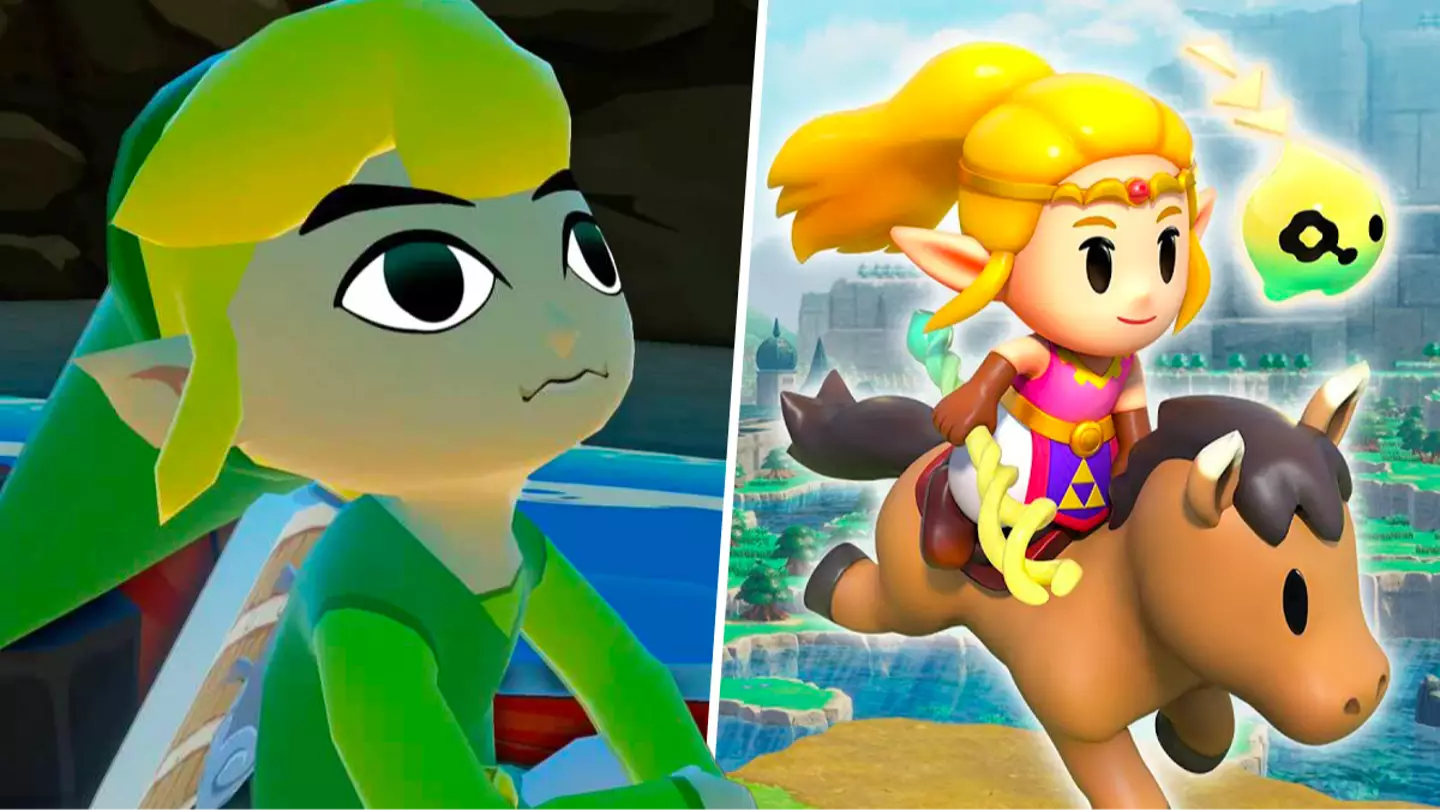
After months of waiting for the new Legend of Zelda game to arrive, it’s finally here. As the hype for the new game gathers momentum as more people discover its irresistible charms, I can’t help but feel we owe an apology to previous Zelda games; specifically,The Legend of Zelda: Wind Waker.
Ocarina of TimeandMajora’s Maskboth created this expectation of what aLegend of Zeldagame should look and feel like. Granted, the Game Boy outings of the hero in green were more cartoonish, but given how limited the capabilities of the hardware was, it’s unsurprising those titles remained quite basic and childlike.
Advert
Advert
As we discuss the past we look to the present withThe Legend of Zelda: Echoes of Wisdom
If we momentarily remove those Game Boy releases from the equation,Wind Wakerwas the next game to launch afterMajora’s Mask.Visually, they’re markedly different. Muddy colours were part and parcel ofMajora’s Mask’s story, to help create that atmosphere of impending doom. In contrast,WindWaker was joyful, even when Link roamed creepy corridors filled with enemies. It was too much change for the fans. Fans who’d become accustomed to the “realistic” imagery the Nintendo 64 and GameCube first aimed for.
Now, however, we welcome its whimsy. In an industry where every game is striving to be as photorealistic as possible,Wind Wakeris a charming escape. It also plays a large part in why titles such asThe Legend of Zelda: Echoes of Wisdomchoose to rely on the allure of bright colours, simpler graphics, and a fantastical innocence. It’s not only attractive to look at, it also feels unique. EvenBreath of the WildandTears of the Kingdom, two titles that explore the darkest parts of this universe far more deeply than previous adventures, stray far from photorealism. Instead, both deliver an artistic rendition akin to stepping inside a painting.
Advert
Advert
The last time we truly had a gritty looking Zelda game was whenTwilight Princesscame out. The creative process took a turn yet again, and with it, “gothic” Zelda was born. Much likeWind Wakerbefore it, it faced backlash because it didn’t fit the idea the fandom held in its mind. Not only did it reportedly “lack charm”, but critics claimed that its character designs were “ugly”. Not everyone deemed this a bad thing, however, I feel it unfair to describe anything about that game as ugly. It’s foreboding, it carries an undercurrent of unease, but it’s never unattractive.
You don’t need to agree with me to notice a pattern forming here. Sadly, it’s one that shows no signs of changing. Even though plenty of fans have been waiting years to play as Zelda,Echoes of Wisdomisn’t safe from judgement. The bell tolls for every Zelda experience it seems. This so-called “empty” looking game is the “death” of “traditional” Zelda, whatever that even is anymore. There will always be classic Zelda vibes, however, what’s deemed traditional has been steadily changing over the years ever since the game launched. To not innovate would be to stagnate. Still, scathing words are aimed atNintendo’s latest creation.
Yet, as you’ll note if you take the time to revisit each instalment of the franchise, both before and afterWind Waker’s launch, cutesy graphics have been cemented as part of the aesthetic. The Legend of Zelda isn’t one or the other, it’s both. It’s hard hitting when it needs to be regardless of whether Link is a dinky cartoon version of himself, or whether he’s a statuesque knight fighting at Zelda’s side.
These characters, much like the series itself, are multifaceted. It’s what keeps its lore so interesting despite the series being decades old, and it’s part of the reason why we oweWind Wakerthat apology. Breaking the mould is what it was initially known for, and now, over 20 years later, that’s part of the legacy that’s helping define the game in today’s climate.
Topics:The Legend Of Zelda,Nintendo,Features
