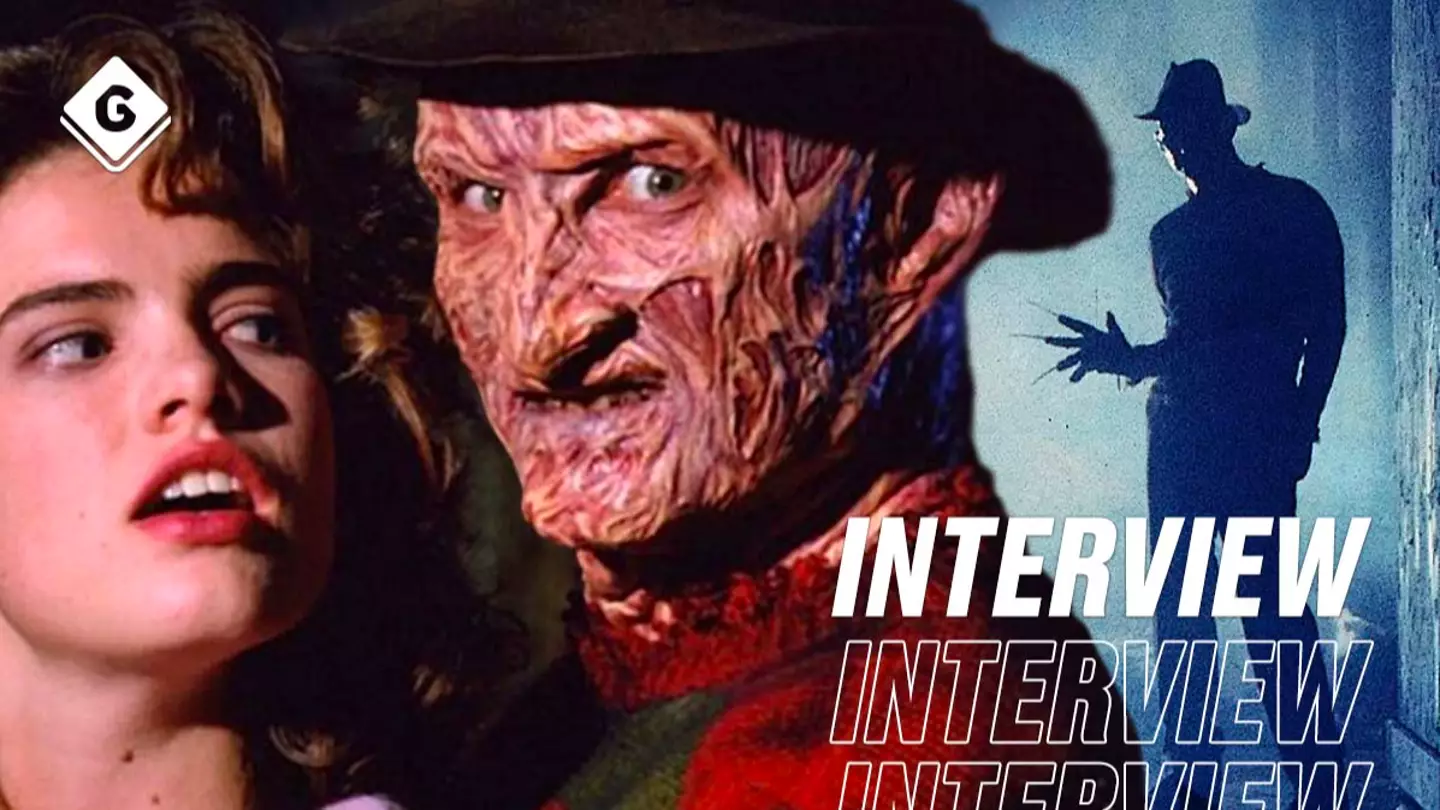
Suddenly, what may or may not be hiding under our beds was the least of our worries; we didn’t know if our dreams were safe. One man now dominated our waking and sleeping thoughts, a man with knives for fingers, severely burnt skin, and red and green jumper.
Advert
Advert
Although it may not feel like it for those who remember its release in 1984, it’s been 40 years sinceA Nightmare on Elm Streetfirst terrified audiences. To celebrate this momentous milestone, I sat down and had a brief but incredibly enjoyable chat with Freddy Krueger and Nancy Thompson, aka Robert Englund and Heather Langenkamp. For a horror fan such as myself – a self-professed scream queen – it was a dream come true.
Perhaps it’s a bland opener for an interview, but I wanted to know what it’s like being such an indelible moment in popular culture. After all, few of us will ever taste such fame. For Langenkamp, who some of you will recognise fromNetflix’sThe Midnight Club,it’s an unusual scenario you have to get used to.
Watch asA Nightmare on Elm Street’s Freddy and Nancy are reunited
“Well, it definitely grows on you. In the beginning, you don’t believe it, and then there’s like five or six stages of being a pop icon, I guess,” Langenkamp explained, “You don’t understand it, and then you kind of lean into it, and then you suddenly welcome it, and then you can’t get enough of it. You know, it keeps going and going.”
Advert
Advert
Of course, for Langenkamp, her career was still in its infancy when she got the role of Nancy. But for Robert Englund, he was already a well-known name. In his own words, Englund was “fortunate” to already know what international renown felt like.
“I was fortunate that I’d had my first really big hit just prior toNightmare on Elm Street, and it was science fiction, and it was an international success. So, I had just begun to taste that kind of fame where people put your name, you know, to your face for the first time,” he shared with me. That said, while Englund explained how he never set out to be an icon, being the “image of Freddy” made for a unique incomparable moment in his career. People were putting his face to the name; celebrities and presenters were speaking about Englund’s portrayal. It’s an experience that’s steadily continued over the years as new generations undergo the rite of passage of watching the first film.
“It’s interesting to see how different generations of fans respond to something that’s part of popular culture. But the first time, you know, you hear a Freddy Krueger joke out of Johnny Carson’s mouth or Jimmy Fallon refers to you,” Englund added, just as Langenkamp joined in to say, “Or actually, when the New York Times crossword puzzle has a clue and you really feel you’ve made it in pop culture.”
It’s a bizarre moment, one that neither actor anticipated happening. Although every star would like to make their big break – or in Englund’s case, their second – it’s probably too much to dare to believe it’ll happen. While I can only speculate on this, it does seem to align with what both Langenkamp and Englund told me when I asked them if they ever expectedA Nightmare on Elm Streetto be so popular.
Advert
Advert
For Englund, though, the chance to work with Wes, while not necessarily a guarantee of success, was a career ambition he’d had for some time. “I actually wanted to work with Wes because I had been hanging out at a new wave bar in Hollywood […] and they had a monitor at either end of the bar, and one of them ran clips from David Lynch’sEraserhead, and the other one ran clips from Wes Craven’sLast House on the Left,andThe Hills Have Eyes.
“I thought he was sort of a David Lynchian dark artist. And so, when I had the break from my television series, I wanted to work with him. Then I read the script and heard Wes' sort of pitch and how he saw this play out as this kind of dark cautionary tale, this horror fairy tale, but also about a kind of change in America […] I really, I really liked it, you know.”
Advert
Advert
The call to horror seems to have always been with Englund from a young age, with him recalling how he saved up money from mowing lawns so that he could watch Saturday matinees of Hammer Horror films. As weird as it may sound, this reference to Hammer Horror instantly made me feel even more connected to Englund, for I too had grown up watching those films. For many who champion the horror genre, it’s the foundation for a lot of the movies we see today.
What most fascinates me about Freddy Krueger, though, is the fans’ love for him. He’s an embodiment of evil within this franchise, yet many would argue that he’s beloved, nonetheless. The way Englund sees it, this is because Freddy is “unapologetically evil”. In contrast to the likes of Halloween’s Michael Myers and Friday the 13th’s Jason Voorhees, Freddy has fun with his wickedness. There’s a tongue-in-cheek element to the performance that other classic boogeymen don’t possess.
“I think all those things go into the sort of reason why the fans embrace him,” he continued. “Wes laid the template for Freddy, and he allowed me to fill it. I exist in a subconscious landscape of the nightmare […] so, I chose to compliment the frame of the movie somewhat. I don’t want to say I danced him, but I did move him a specific way sometimes, like he kind of wore the scenery a little bit […] and I think maybe it’s one of the reasons for the character’s success.”
Advert
Advert
Of course, having discussed such a legendary cinematic villain, I couldn’t not ask about the way we perceive real serial killers. My LADbible colleagues wanted to know what both Englund and Langenkamp thought about shows like Netflix’sMonsters: The Lyle and Erik Menendez Storybringing true crime stories to the fore. The level of sensationalism these true crime dramatisations include begs the question why audiences enjoy watching them, and more importantly, if horror/true crime has gone too far.
For Langenkamp, it’s hard for her to understand the fascination. “I mean, it’s hard for me to understand that new leaning into the psychotic serial killers. But it’s such a popular genre that, of course, people are going to just be flooding into it […] I think it’s always just a sign of sign, wave, you know, it’s going to go up and go down.” She then adds, “I think people like to get their blood any way they can get.”
As for Englund’s take on this cultural development, he sees it as an almost yearning from the audience for “grounded horror”. “We’ve exhausted the zombies. I’m still waiting for my favorite vampire performance, although Gary Oldman is pretty good vampires, but because those are fanciful, I think the serial killer provides a much more grounded horror.”
He theorised further, “Even in something as risk taking as the performance of Nick Cage inLong Legs, it’s still terrifying because it’s grounded in reality. I think that’s why the true crime aficionados have kind of merged with horror fans and embraced the true crime serial killer.” It’s a theory that certainly holds weight, as these two horror sub-genres blend together quickly, blurring the line between fact and fiction.
Topics:Features,Interview,TV And Film
